
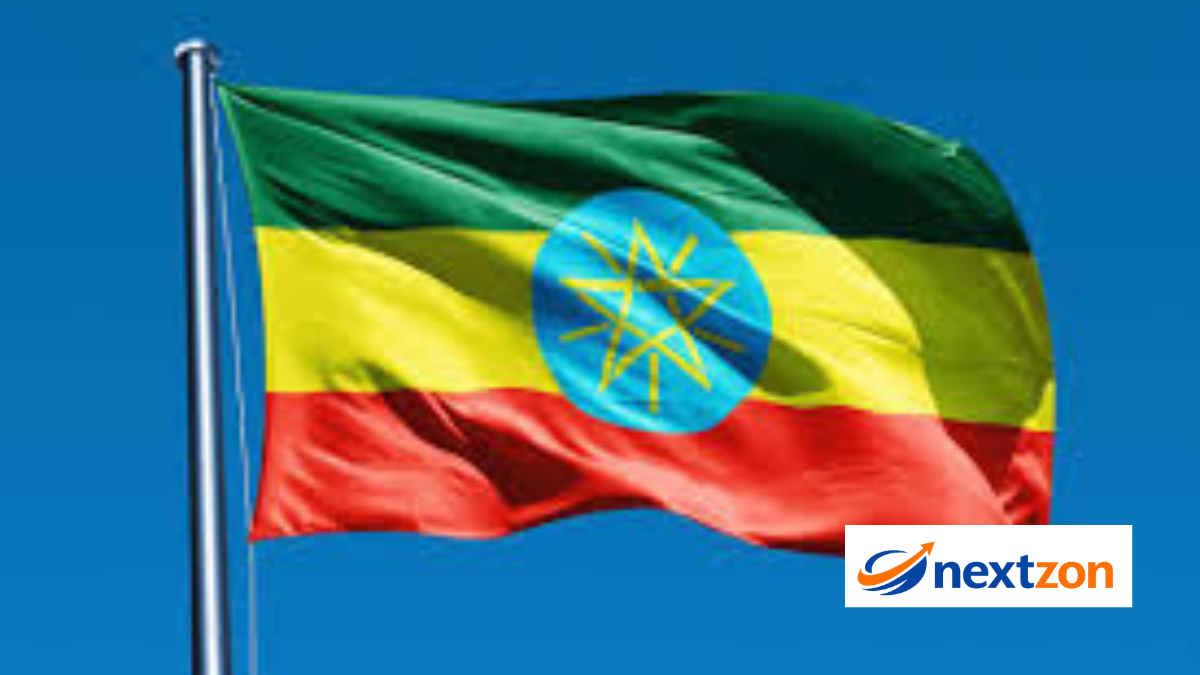
The Ethiopia flag is one of the most recognisable national symbols in Africa, representing a nation with a proud and ancient history. Its striking green, yellow and red tricolour instantly captures attention, while the central emblem reflects unity and peace. For centuries, Ethiopia has stood as a symbol of resilience, and its flag mirrors that enduring strength and independence in a powerful visual form.
More than a decorative banner, the Ethiopia carries deep cultural and political meaning. It reflects the country’s survival through invasions, internal change and modern transformation. Across the African continent and beyond, the flag has inspired unity movements and Pan-African ideals. Understanding the Ethiopia flag offers valuable insight into Ethiopia’s heritage, identity and global influence.
Design and Structure of the Ethiopia Flag
The Ethiopia flag consists of three equal horizontal stripes arranged from top to bottom in green, yellow and red. At the centre lies a blue circular disc containing a golden five-pointed star with rays extending between the points. The flag follows an official proportion of 1:2, ensuring visual balance and clarity when displayed on public buildings or during international events.
Adopted in its current form on 6 February 1996, the design merges historical continuity with modern symbolism. The clean horizontal layout makes the Ethiopia flag easily distinguishable from other national banners. Every element is intentionally placed, ensuring that both tradition and contemporary values are represented in a harmonious and meaningful design.
Meaning of the Colours in the Ethiopia Flag
The colours of the Ethiopia flag are deeply symbolic and rooted in national tradition. Green represents the fertility of the land and the country’s rich agricultural heritage. Ethiopia’s highlands and natural resources are central to its identity, and the green stripe reflects hope and prosperity for future generations who depend on the land.
Yellow symbolises peace, harmony and religious coexistence among Ethiopia’s diverse communities. Red represents courage, sacrifice and the blood shed in defence of independence. Together, these colours form a powerful narrative of resilience and unity. The Ethiopia flag therefore communicates both historical struggle and a hopeful vision for national stability and cooperation.
Symbolism of the Blue Disc and Golden Star
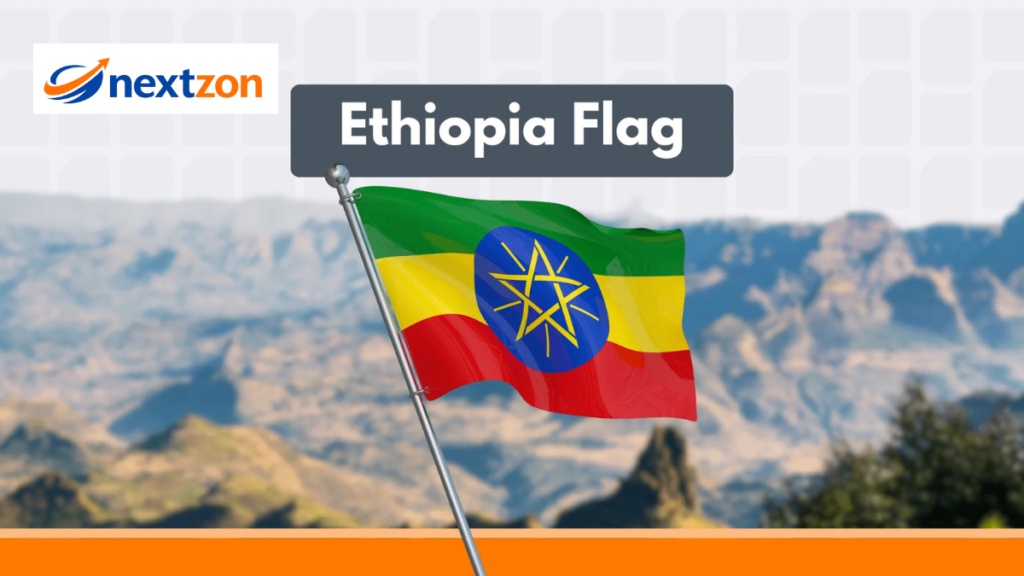
At the centre of the Ethiopia flag, the blue disc symbolises peace and stability. Blue conveys a message of calm governance and a commitment to unity across ethnic and cultural divisions. The placement of the emblem in the middle reinforces the idea that unity stands at the heart of Ethiopia’s national identity.
The golden star within the blue disc represents equality among the country’s diverse peoples. Its five points and radiant lines signify shared prosperity and collective strength. Rather than favouring one group over another, the emblem emphasises inclusiveness. This modern addition to the Ethiopia flag highlights the nation’s dedication to equality and mutual respect.
Historical Evolution of the Ethiopia Flag
The origins of the Ethiopia flag can be traced back to imperial times when green, yellow and red were used on royal banners. In 1912, the tricolour format was formally arranged into horizontal stripes, marking a significant step towards the modern national flag. These colours later became widely recognised symbols of African independence movements.
During the reign of Emperor Haile Selassie, the flag prominently displayed the Lion of Judah, symbolising monarchy and religious heritage. Following political change and the Derg regime, the design evolved once more. In 1996, the current emblem with the golden star was introduced, shaping the Ethiopia flag as it appears today.
Ethiopia Flag and Pan-African Influence
The Ethiopia flag has had a profound influence on the Pan-African movement. Because Ethiopia maintained its sovereignty during much of the colonial era, its colours became symbols of resistance and dignity. Many newly independent African nations adopted similar green, yellow and red combinations in honour of Ethiopia’s example.
This influence extends beyond politics into music, art and global cultural movements celebrating African unity. The Ethiopia flag became an emblem of hope for people of African descent worldwide. Its legacy continues to shape conversations about identity, solidarity and empowerment, reinforcing Ethiopia’s unique role in continental history.
Modern Use and National Significance
Today, the Ethiopia flag is displayed on government buildings, schools and diplomatic missions across the globe. It appears during national celebrations, state ceremonies and international sporting events, proudly representing the nation on the world stage. The flag’s clear design ensures it remains instantly recognisable in any setting.
In the digital era, the Ethiopia flag emoji is widely used to express national pride and cultural connection. National Flag Day further reinforces its importance within society. Whether raised during official functions or shared online, the Ethiopia continues to unite citizens and strengthen their shared sense of belonging.
Comparison with Earlier Flag Designs
Earlier versions of the Ethiopia flag, particularly during the imperial era, featured the Lion of Judah holding a cross and a banner. This symbol was closely linked to monarchy and Ethiopia’s Christian heritage. It reflected a specific historical period and the authority of the emperor.
The modern design replaced the lion with the golden star to promote inclusivity and equality among all ethnic groups. While the traditional colours remained unchanged, the updated emblem shifted the focus from royal symbolism to national unity. This evolution demonstrates how the Ethiopia adapts to reflect changing political and social values.
Cultural and Global Importance of the Ethiopia Flag
The Ethiopia flag is not merely a national symbol but also a cultural icon recognised worldwide. It represents one of the oldest continuous civilisations in Africa, adding depth to its global significance. Its colours have been adopted in various artistic and cultural expressions, strengthening its international presence.
For Ethiopians living abroad, the flag serves as a meaningful connection to home. It symbolises resilience, pride and heritage in foreign lands. The Ethiopia flag therefore operates as both a political emblem and a deeply personal representation of identity and belonging.
Conclusion
The Ethiopia flag stands as a powerful representation of history, unity and aspiration. From its tricolour foundation to the modern golden star emblem, every element tells a story of courage and hope. Its influence on Pan-African identity further amplifies its importance beyond national borders.
By exploring the meaning, history and symbolism of the Ethiopia, we gain a deeper understanding of Ethiopia’s enduring spirit. As a beacon of independence and inclusiveness, the flag continues to inspire pride and solidarity, reflecting the strength and diversity of the Ethiopian people.
Frequently asked questions
What do the colours of the Ethiopia flag represent?
Green symbolises the land, yellow stands for peace and harmony, and red represents sacrifice and bravery.
When was the current Ethiopia flag adopted?
The present design of the Ethiopia flag was officially adopted on 6 February 1996.
What does the star on the Ethiopia flag mean?
The golden star represents unity, equality and shared prosperity among Ethiopia’s diverse communities.
Did the Ethiopia flag ever feature a lion?
Yes, earlier imperial versions displayed the Lion of Judah as a symbol of monarchy and heritage.
What is the proportion of the Ethiopia flag?
The official proportion of the Ethiopia flag is 1:2.
Why are Ethiopia’s colours linked to Pan-Africanism?
Ethiopia’s green, yellow and red inspired many African nations during independence movements.
Is Ethiopia one of the oldest independent nations in Africa?
Yes, Ethiopia is one of Africa’s oldest independent countries, which adds historic significance to its flag.
Also Read: dennis bowman